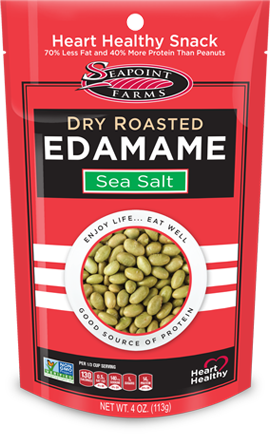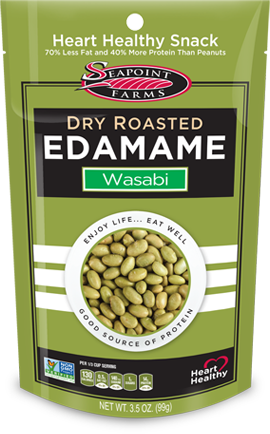

The Food and Drug Administration (FDA) says foods containing soy protein may reduce the risk of coronary heart disease (CHD). Foods that meet the FDA guidelines can label their products with this claim. The soy health claim is based on the FDA's determination that 25 grams of soy protein per day, as part of a diet low in saturated fat and cholesterol, may reduce the risk of heart disease by reducing blood cholesterol levels. To get the heart-healthy benefits of soy protein, the FDA recommends that consumers incorporate four servings of at least 6.25 grams of soy protein into their daily diet for a total of at least 25 grams of soy protein each day.
In order to claim the healthful effects of soy, a soyfood must meet the following criteria:
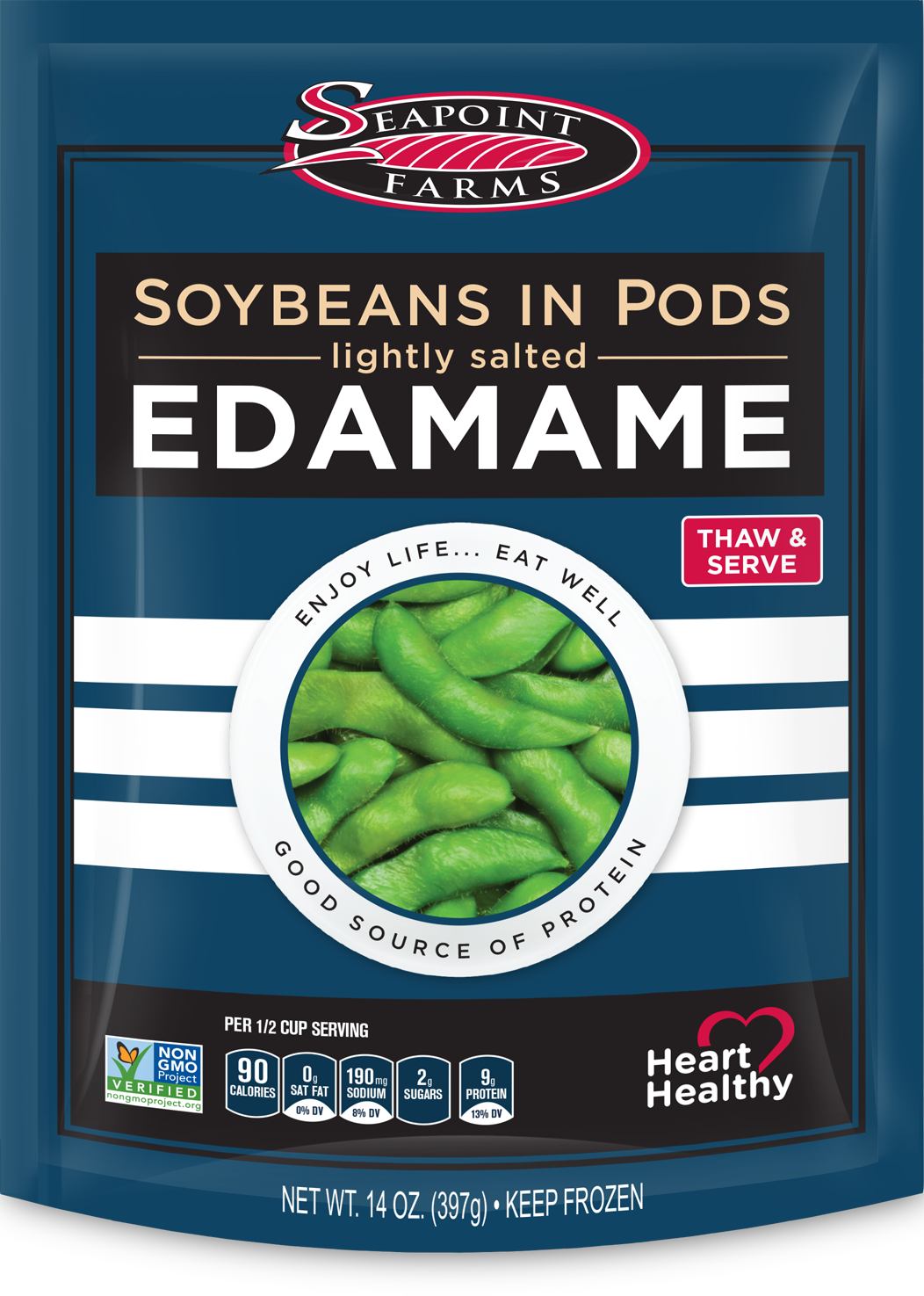
New food product labels may now say, "Diets low in saturated fat and cholesterol that include 25 grams of soy protein a day may reduce the risk of heart disease. One ½ cup (75 gram) serving of Seapoint Farms shelled Edamame provides 8 grams of soy protein." Soyfoods are a source of high-quality protein. In addition, consumption of soy protein provides health benefits that may help prevent or treat certain chronic diseases. Currently, a great deal of research is being conducted to investigate possible health benefits of soy.
Eating more high-fiber foods like fruits, vegetables, whole grains and soyfoods may help with weight loss efforts when substituted for higher calorie foods. Many soyfoods are filled with fiber; ongoing medical research is showing that fiber provides a feeling of satiety and fullness in between meals and reduces hunger cravings. Ultimately, this helps prevent unnecessary eating and excessive calories which can lead to weight gain. Aim for 25 grams of fiber every day. A serving of Seapoint Farms Edamame contains 4 grams of fiber. Seapoint Farms Dry Roasted Edamame contains 8 grams of fiber per serving.
In addition, many soyfoods contain fewer calories and fat grams, making weight loss even easier.
Losing weight may be a lot easier if breakfast becomes a priority every day, and soyfoods may help with weight loss efforts when substituted for higher caloric foods. Eating breakfast provides a feeling of fullness, or satiety, which helps curb hunger and prevents overeating of high-calorie snacks and foods. In addition, research indicates fewer calories may be consumed at the next eating occasion or meal.
Soyfoods are perfect for breakfast, especially when trying to lose weight because they are filled with bone-building and heart-healthy soy protein, plus they reduce overall calories and fat grams. For example, traditional sausage links contain 160 calories and 14 grams of fat; soy breakfast links have only 70 calories and 3 grams of fat. Other soy breakfast foods include bagels made with soynuts and soy cereal with vanilla soymilk.
Being on a low carb or the next fad diet when trying to lose weight should not come at the expense of having a healthy heart. Eating unlimited amounts of high-protein foods loaded with fat and saturated fat could prove detrimental over time. Soyfoods help promote healthier eating habits with low carb diets, because many soyfoods are naturally low in fat and saturated fat, while being high in heart-healthy protein. For example, the average soy veggie burger provides 12 grams of soy protein with only five grams of total fat, one gram of saturated fat and just three grams of net carbs.
Soyfoods containing soy protein can be allies in the ongoing battle against heart disease, the number one killer of adult men and women. Over 40 scientific studies have proven the positive effect of soy protein on lowering cholesterol levels, including the harmful LDL cholesterol, which leads to the decreased risk of heart disease. In fact, the Food & Drug Administration recommends eating 25 grams of soy protein every day as part of a diet low in saturated fat and cholesterol. A serving of Seapoint Farms Edamame contains eight grams of heart-healthy soy protein, Seapoint Farms Dry Roasted Edamame contains 14 grams of heart-healthy soy protein.
Certain fatty fish, like salmon and tuna, contain the best source of heart-healthy omega-3 fatty acids. But certain plant foods, like flaxseed and soybeans, also contain these fatty acids. Soybeans are one of the best non-fish sources of essential omega-3 fatty acids, which may help reduce the risk of coronary heart disease. Compared to other beans like pinto beans and navy beans, soybeans have a higher fat content, but this fat contains these heart-healthy omega-3's.
Soy protein may provide positive results for people with high blood pressure. According to a recently published scientific study, researchers found that both the systolic and diastolic blood pressure were reduced in middle-aged and elderly women who ate at least 25 grams of soy protein daily. Since supermarkets today are filled with numerous soyfoods, eating 25 grams of soy protein is easy. Start the day with soy cereal for breakfast (eight grams soy protein). Add a serving of Seapoint Farms Dry Roasted Edamame for lunch (fourteen grams soy protein) and have a serving of Edamame pods for an afternoon healthy snack (eight grams soy protein).
While soy protein may or may not help reduce hot flashes for women going through menopause, soy protein has other proven benefits extending well into post-menopausal years. Research has found that consuming soy protein before, as well as after, menopause may help protect bones from becoming weak and brittle. And since post-menopausal women face an increased risk for osteoporosis, keeping bones healthy with soy protein-rich foods is critical.
In addition, soy protein may help reduce the risk of heart disease, another major concern after menopause.
The link between omega-3 fatty acids and a healthy heart is well established. But there's yet another reason - geared toward mothers and their daughters - for eating more omega-3's.
A newly released scientific study found that mothers who eat foods rich in omega-3 fatty acids during pregnancy (and while breastfeeding), may help to significantly reduce their daughters' risk of developing breast cancer later in life. In addition, this study found that including omega-3 rich foods throughout childhood and teenage years may continue to help provide protective benefits against breast cancer.
Fatty fish like tuna, salmon and mackerel are the highest source of omega-3 fatty acids, but walnuts, flaxseed and soybeans also contain these critical omega-3's.
Including soyfoods during a teenage girl's adolescence years may provide increased protective benefits and reduce the risk of developing breast cancer later in life. Although there is a lack of evidence that consuming soy as an adult may reduce the risk of breast cancer, ongoing scientific research is showing that consuming soy protein as a teenager may help reduce breast cancer risk as an adult by nearly 50 percent. These impressive results were obtained by eating just 11 grams of soy protein daily. Fourteen grams of soy protein is found in one serving of Seapoint Farms Dry Roasted Edamame.
In addition to reducing risk of breast cancer, soy protein-rich foods may promote a healthy heart and strong bones.
Medical research has determined that foods rich in fiber, low in fat and high in phytochemicals may help reduce your risk of developing certain cancers. Consuming soyfoods may prove beneficial when eating to reduce cancer risk because many soyfoods are not only high in fiber, they are low in total fat and high in soy protein and phytochemicals called isoflavones.
Isoflavones are naturally-occurring plant compounds that have been attributed in numerous medical and scientific studies to reducing risk of colon, breast and prostate cancer.
Some of the same foods that can lower risk of heart disease, like soyfoods, may also reduce the risk of the second most common cancer in men. Medical research has shown that foods rich in soy protein may be protective against prostate cancer by helping to promote healthier prostate tissues. And although a specific level of soy protein hasn't been recommended yet for reducing prostate cancer risk, adding one soyfood every day could be beneficial. Plus soyfoods will provide heart-healthy and bone-building benefits at the same time.
The latest medical research has found that several natural components of soy may help protect against colon cancer, which is the second leading cause of cancer death in the United States. The components of soy that may be helping prevent colon cancer are called isoflavones and saponins. Both are found in soyfoods such as Edamame, soymilk, and soynuts.
Many soyfoods are not only good sources of these isoflavones and saponins, but they are high in fiber, and fiber-rich foods have also been associated with lower cancer risk.
Limiting high fat foods may also help reduce risk of developing colon cancer. Substituting soy veggie burgers or tofu for higher fat protein foods will help cut fat considerably.
Several benefits of soy protein exist for the management of diabetes and provide support for the importance of adding soyfoods to a diabetic diet.
First, many soyfoods have a lower glycemic index. Foods with a low glycemic index help keep blood sugar levels more stable, making diabetes much easier to control. Soyfoods like canned yellow soybeans and frozen green sweet soybeans have a lower glylcemic index than other soyfoods.
Secondly, many soyfoods are high in dietary fiber, and fiber also helps stabilize blood sugar levels. Everyone - including people with diabetes - should aim for at least 25 grams of fiber daily. Roasted soynuts contain six grams of fiber and a soy veggie burger has four grams.
Plus, soyfoods can provide additional benefits for controlling one of the most prevalent complications of diabetes - heart disease.